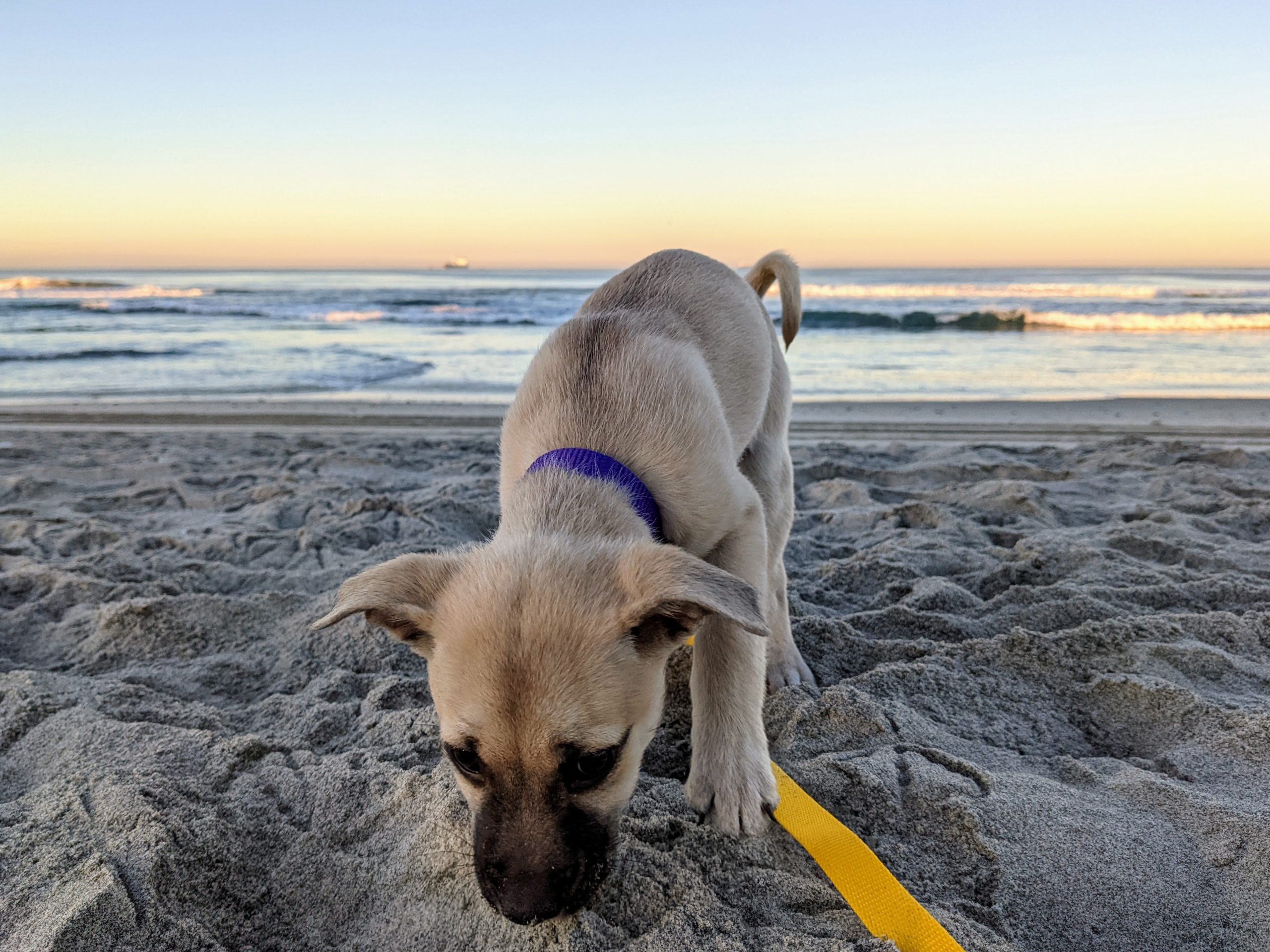
One quiet morning, a few years ago, I was walking on the beach with our puppy, Bella. It was the middle of the week, so there were very few people around. It promised to be a beautiful start to the day. Before I could even register what was happening, a giant dog was barreling past me, and the leash was jerked out of my hand. The dog had snatched Bella up and was shaking her furiously, like something out of a nature documentary. It was one of the most violent, visceral things I’ve ever seen up close. Thankfully, there happened to be a few kind people down the beach who heard me screaming hysterically for help with my poor little puppy, and between them and the guy to whom the big dog belonged, they freed Bella from its jaws. We got her to the vet, and she was miraculously fine aside from several deep bites all over her body.
Anyone who knows me knows I freaking love dogs. I’ve never met one I didn’t fall head over heels for immediately. But this changed something in me that I never thought was possible. I became absolutely terrified of dogs.
All of them.
The neighborhood dogs that I once considered friends now felt like a threat. It was an awful feeling. Not only the fear itself, which wreaked havoc on my heart rate, stress levels, and health, since we live in a neighborhood rife with dogs, I’d also stopped walking everywhere. But the loss of something I loved.
Something that had, for my entire life, up until that morning, brought me so much joy and comfort was violently taken away from me through no fault of my own. I wasn’t putting myself in a dangerous situation, I wasn’t ignoring a “beware of the dog” sign or trying to pet a stray (as I so often have). It just happened. The fear became nearly debilitating. If we were out with our son and I saw a dog, I would immediately scoop him up to keep him safe, and he would promptly tell me to put him down because, to him, it made no sense.
It was incredibly difficult. When I walked on the beach alone, I was painfully hyper-vigilant. I couldn’t even listen to music while I was outside anymore, and was always looking over my shoulder for some vicious beast to come charging at me. If I saw a dog alone with no leash, I would avoid the area and would even turn around and go back home, ending my walk early because I just couldn’t bear to see another one.
Living where we do, not seeing strays or dogs off-leash isn’t really an option. I knew this was something I was going to have to work on. So I did, very slowly. I practiced breathing when I passed by a group of dogs I didn’t know. I stopped turning around when I saw a dog on the beach by itself.
Eventually, after years, the terror eased, and I’ve fallen back in love with dogs, even if in a more reserved, careful manner. I would notice in the beginning, after about a year or so, that my hands weren’t shaking when I saw an unfamiliar dog, and I felt a little relief that the fear was subsiding. After more time passed, at some point, without even realizing it, I stopped being afraid of dogs.
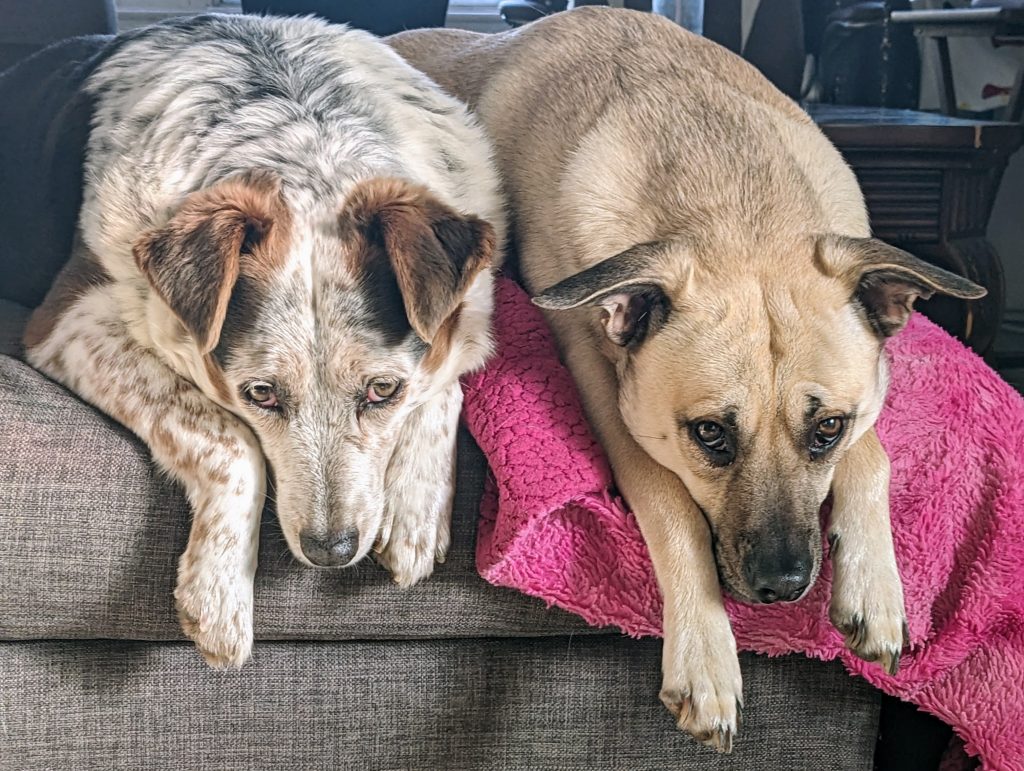
There were probably quicker ways for me to have dealt with this. I imagine some actual therapy, or a regular trip to somewhere I could snuggle and play with puppies for an hour a week, would have eased some of that fear and anxiety faster. But just by making the conscious effort to expose myself to regular situations where I encountered this obstacle and trusting that what happened that morning was not normal, or typical, I was able to retrain my brain to know what it knew before: That most dogs aren’t dangerous, and that was just a really unfortunate incident with a dog that thought Bella looked like easy prey on the beach. Repeating that to myself was never going to be enough, though. I needed to see it. Feel it. Live it. Over and over again.
And according to science, the self pep-talk was probably never going to be enough. I did need to literally see it.
Research from University College London shows that mice can learn to override their survival instincts. When a perceived threat proved to be harmless, they eventually stopped trying to escape, and the danger no longer triggered a fear response. This shift happens because the higher visual cortex steps in to teach the brain that it’s safe.
As explained in this paper, our brains have a “panic button” in the brainstem called the superior colliculus. It’s hard-wired to trigger an immediate escape response the second it detects a visual threat, sometimes before we even realize what’s happening. To get over this, we have to use the “thinking” parts of our brain called the higher visual cortex. This area acts like a teacher, and it’s essential for the initial phase of learning because it’s the bit that tells your brain to look closer and realize that the threat is actually harmless.
Once we’ve practiced being brave enough times, that teacher eventually hands the job off to a deeper, more automatic region called the vLGN. This area acts like a permanent “mute button” for that primitive panic center, effectively silencing the alarm before it even starts. Which turns this difficult, conscious effort of bravery into an automatic response.
So when I’m out on a walk, and I see a dog, I’m no longer going through the same thought processes that I had to for years, telling myself that I’m safe, or reminding myself that most dogs aren’t aggressive, etc. It’s just an automatic response. I just know it, and I get to instead focus on telling them “Oh, hi, good dog! Nice to meet you. Did you know I love you?”
I may rage against my brain and often curse it for being so gosh darn complicated, but it really is amazing. I’m grateful that mine allowed me to find my way back to something I love when a random, unpredictable event temporarily took it away.
If these words found a home in your heart today, I’d be thrilled if you subscribed to the Propagating Self-Love newsletter. I send out weekly(ish) notes on self-love, the science of resilience, and the messy, beautiful art of learning to bloom where you are.