One of the biggest lies we’re sold is that our habits will eventually become automatic. For the neurotypical brain, repetition creates a neural groove that eventually allows for autopilot. But for the neurodiverse brain, it’s likely that the friction never fully disappears.
The most common example of an “automated habit” I come across is brushing your teeth. I’m 43 years old, and brushing my teeth is something I have to actively force myself to do every day. It’s never become automatic for me. For many of us, a habit isn’t a “set it and forget it” kind of deal; it’s a choice we have to make, consciously.
Every. Single. Time.
My neighbor recently told me she finishes tasks easily because “checking it off the list” feels so good that it makes the effort worth it. And, yeahhh, my brain doesn’t do that. For me, finishing isn’t a reward; it’s just the point between where that work stops, and something else begins.
Building a new habit or dismantling an old one can require more than just vague, long-term objectives. We need immediate, tangible feedback to successfully train our brains into trusting that doing the task is worth the work. “If I walk every day, I will feel better in six weeks” is not an immediate reward, whereas “if I organize the closet, I can listen to the new episode of my favorite podcast I’ve been looking forward to,” is.
For some, keeping an unbroken streak going is a great way to keep up with a new habit or routine. The checkmark, the giant red “X” on the calendar that marks yet another successful day building this new habit. But, for others, a single missed day can feel like a moral failure that disregards all of the time and energy invested. We need to focus less on doing it perfectly every day and more on the act of picking it back up.
There can be an incredible amount of pressure and anxiety to keep up with a daily streak, and a fear of “failure” can feel like an insurmountable hurdle to overcome, so try removing it entirely from the very beginning. Plan to walk every other day, or take the weekends off laundry. A missed day doesn’t have to be a “broken” streak. Maybe keep track of all the days you chose to do your task; that’s the important part, not how many days you’ve done it consecutively.
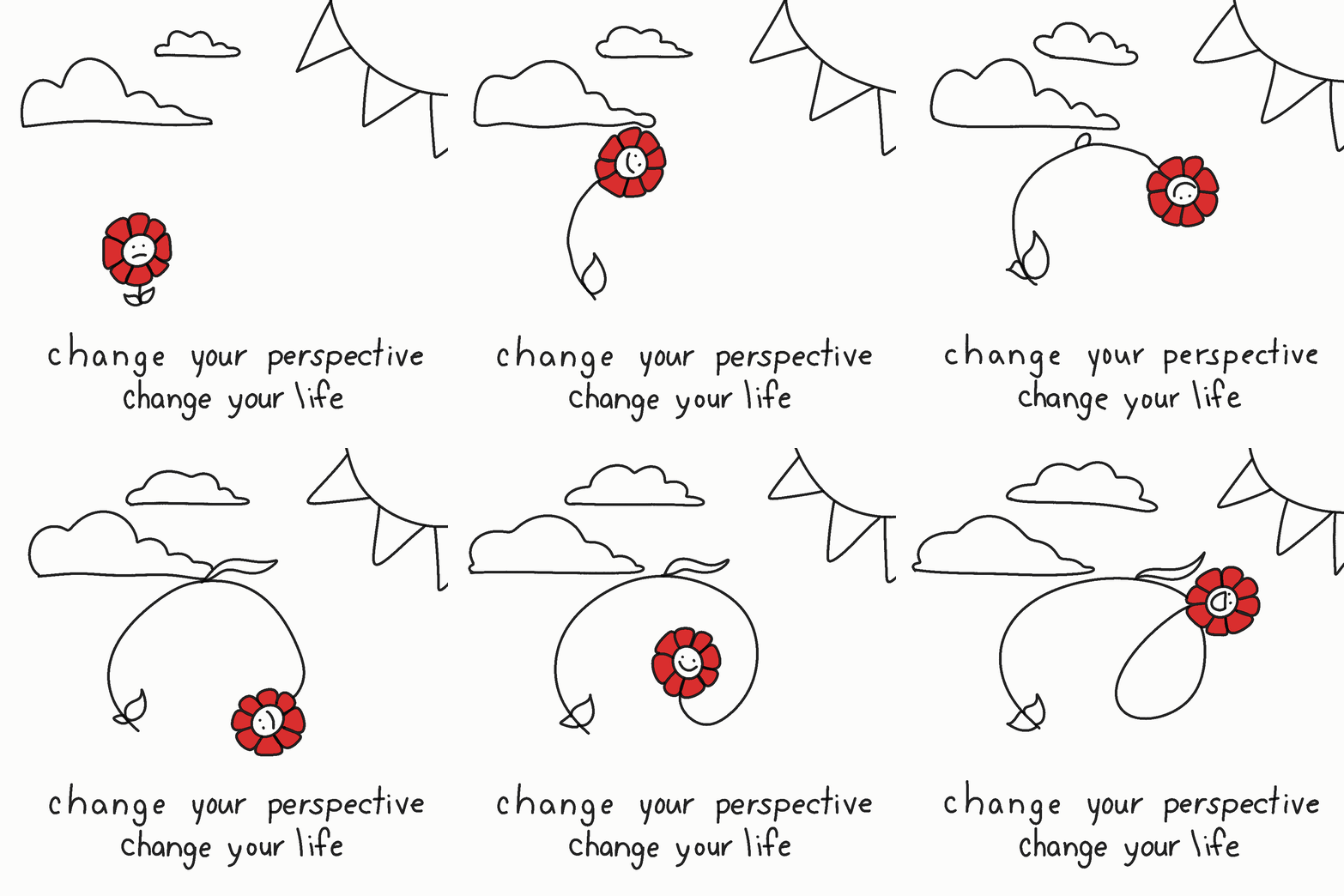
It’s really just about perspective and reframing how you talk to yourself, even in your head. Most books, articles, and advice given for habit formation offer some kind of reassurance for when you “slip up/fail/make a mistake,” etc., and I think that’s where some of our shame and struggle to keep up with these streaks can come in. The words we use matter.
If you miss a day, it’s not a slip-up or a setback. You didn’t fail. You simply made another choice in that moment, perhaps a choice to prioritize your mental health or rest. Maybe your kid had a tough time, and there just wasn’t enough time in your day for a trip to the gym. The real goal is to return to the path, not to have never left it.
Before adopting any new habit or routine, you have to be keenly self-aware of your own personality, energy levels, schedule, and internal clock, rather than following any pre-made generic template. If your brain doesn’t wake up until noon, forcing a 6:00 AM gym routine is a recipe for shame, not success. For many neurodivergent people, demand avoidance can also be a significant hurdle, where even self-imposed goals can feel like an attack on autonomy. By recognizing what your specific challenges are, you can stop fighting your nervous system and start working with it.
Make it all super duper simple
Take some time to sit down and check in with yourself about your desired habits. Turn the whole process into a self-care ritual. Write it all out by hand if you’re able, but if you prefer digital, by all means, spreadsheet your heart out. Make a cup of tea, pick up your favorite pen/stylus, grab that fancy paper you might have been saving for something special (psst! You’re something special deserving of luxury.), turn on some soft music if that relaxes you, sit in a comfortable chair, or in the grass in the sunshine, and get your introspection on.
Start by making four columns on your paper or document.
- Run out of time.
- Worried I’ll wake everyone up getting ready.
- Set out clothes in the bathroom night before.
- Shoes/Earbuds/keys by the door night before.
- Listen to music of my choice.
- Enjoy the empty morning beach/birds.
- The light is too bright.
- Water gets everywhere.
- Keep lights off/dim.
- Use soft dedicated washcloths.
- Tactile comfort of warm cloth.
- Follow up with coffee/nice smelling moisturizer.
In the first column, write out a couple habits or routine goals that you either want to start for the first time or restart after a period of avoidance. Stick with just these for now! This is meant to make things easier for you, not add more pressure and chores to your plate. We aren’t solving all of our problems here, we’re just gently learning what actually works for us.
Inspect
In the second column, we are going to explore our hurdles and friction points. This is not the place for shame, blame, or guilt. You are not allowed to write “because I suck/am lazy/can’t stick to anything” because this is a place for facts and reality. It’s important that you’re honest with yourself about what’s actually happening. Maybe you always intend to get up and walk every morning but between getting up, showering, making coffee, feeding the dogs, feeding the kids, getting dressed, checking your email, etc. you run out of time or just forget about it all together because it doesn’t register as a priority or you had all day to talk yourself out of it. Those are real and very valid reasons, not excuses.
Integrate
If the habit isn’t going to be “mindless,” it needs to be frictionless. In the third column, explore and list some ways you could remove friction from the task. Removing as many of the decisions involved ahead of time as you can. Research suggests that a low tolerance of uncertainty and anxiety can be a prime factor in procrastination or avoiding things we may even enjoy, so simplifying the task can be incredibly helpful.
Habit stacking, which is when you link a new habit to an action you already do regularly, is something that many people find useful when trying to complete a task that they don’t necessarily want to do or automatically think about doing. “When I make my coffee, I take my meds.” This removes the risk of decision fatigue when you’re figuring out when to implement the new habit.
One of the most eye-opening concepts I’ve read when it comes to self-care was in KC Davis’s book How to Keep House While Drowning, where she explains that our homes should work for us. No matter what that may look like to anyone else. So put the reminder post-its all over the house if they help. Keep a bin of workout clothes, shoes, and a charging station by the front door if that’s what moves you forward. If you have to go looking for the required tools for the task, you’ve likely already lost your motivation and momentum.
Incentivize
Since just completing the task isn’t really a reward, you must provide one. The ADHD brain, especially, is highly sensitive to immediate feedback.
If you hate doing laundry, try rewarding yourself with something you enjoy while you do it. Order a fancy coffee to sip while you fold and watch a comfort show, or a movie you’ve been wanting to watch. You don’t have to wait until the chore is finished to treat yourself. The good habits/chores/routines don’t need to be a punishment or a penance. The goal should be to turn these tasks into a ritual you can enjoy and get something out of. That’s the whole point! Not to just “get it done” but to create these habits so you can live a happier, healthier life.
In the last column, write out a few ideas on how you could reward yourself for your specific habit goals.
For those of us who find it difficult to prioritize ourselves, self-care-focused “rewards” can often feel like just another chore. True rewards should be effortless and genuinely enjoyable. While a candlelit bubble bath sounds lovely in theory as a treat for mowing the yard every Sunday, the preparation involved can be daunting. If the bathroom isn’t clean, you likely won’t be able to just relax in the tub, and rewarding yourself with an unplanned cleaning session defeats the entire purpose. Make the system work for you. Personally, I save the relaxing bath as a specific reward for when I do a deep clean on the bathroom.
Your results may vary, but the science is clear: The goal has to be small, make sense to your brain, and you need a reward.
If these words found a home in your heart today, I’d be thrilled if you subscribed to the Propagating Self-Love newsletter. I send out weekly(ish) notes on self-love, the science of resilience, and the messy, beautiful art of learning to bloom where you are.