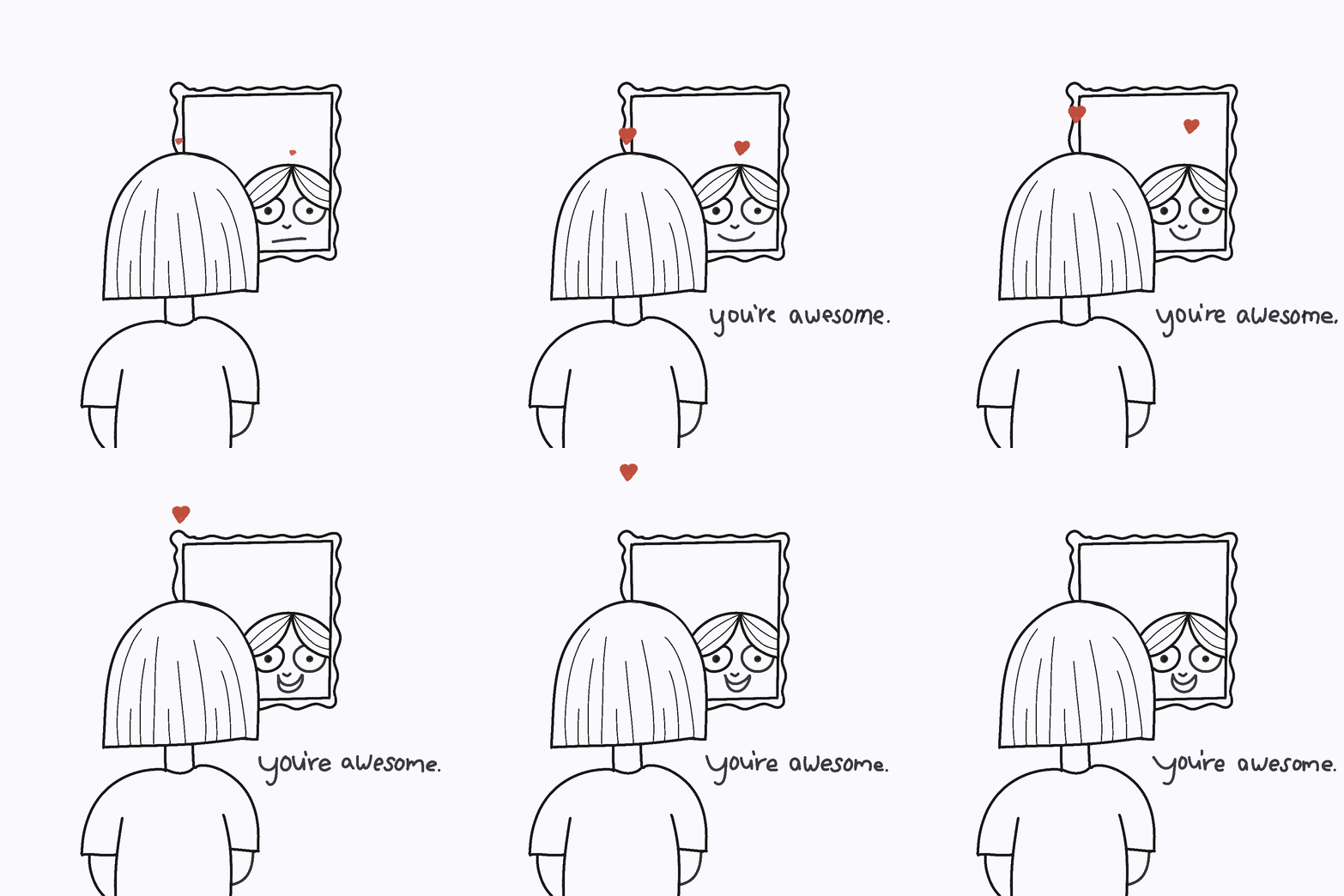
A massive new meta-analysis recently published in American Psychologist is pretty validating for anyone doing the uncomfortable work of trying to be a happier, healthier human. The researchers looked at 129 peer-reviewed studies involving over 17,000 people to determine whether or not self-affirmation actually affects our daily well-being. It turns out, it does, and the findings are pretty dang cool.
What is “self-affirmation”?
Self-affirmation isn’t about surface-level “girl boss” platitudes. It’s defined as a process of reflecting on your own core values (like kindness, family, or creativity) or your personal strengths.
The idea is to maintain self-integrity, the internal sense and belief that you’re a good, capable person, even when it feels like the world is telling you otherwise.
How does it impact your well-being?
The benefits were grouped into four main areas, and even though the effects were statistically “small to moderate,” they were consistent across almost every study.
- Self-Perception: This had the biggest impact. It helps you view yourself as “enough” and more competent, especially when you’ve just faced a setback or a blow to your confidence.
- General Well-Being: It boosts your overall happiness, life satisfaction, and positive mood.
- Social Well-Being: Affirming yourself actually makes you feel more connected to others and helps you build a better sense of belonging in your community.
- Lowering Psychological Barriers: It helps lower stress, anxiety, and that defensive feeling we are flooded with when we feel judged or rejected.
What did they learn?
The research shows that self-affirmation is actually more effective for adults than for teenagers. It makes sense: as we get older, we have a much deeper well of life experience to pull from.
What I found most interesting is that it isn’t just a quick, “feel-good” fix. While you might get an immediate mood boost, the real impact on stress and anxiety actually gets stronger weeks later. It starts this cool self-reinforcing cycle where you eventually just start seeing yourself through a kinder lens by default.
You also don’t have to wait for a total meltdown to use it. It works just as well in your everyday routine as it does during a crisis. It’s less like an emergency potion and more like a daily vitamin that builds up your resilience over time.
Where do we begin?
Before you can affirm yourself, you need to know who you are, right? Take some time to ask yourself: “What qualities make me feel the best about myself?” Is it your patience with others? Your curiosity about the world around you? Your reliability as a friend? Keep in mind, these aren’t goals you’re trying to reach; they are parts of who you already are as a person.
Your Core Value Compass
Examples of the beautiful strengths you already carry.
Choosing empathy and compassion for yourself and others.
Doing the right thing even when it’s inconvenient.
Finding unique solutions or expressing yourself through art and work.
Prioritizing deep, honest relationships with friends or family.
Your ability to get back up after a failure or a hard day.
A commitment to learning and staying open-minded.
Reflecting on why these values matter to you is where the magic happens. Try writing a simple self-affirmation in a journal, or even on a post-it note to stick on the mirror as a visual reminder:
“I value kindness because it reminds me that everyone is carrying a heavy load. When I am kind, I feel more connected to the world around me.”
Self-affirmation isn’t about lying to yourself or pretending things are perfect. We aren’t leaning into delusion here. It’s about maintaining your integrity through the crumminess. If you’re having a hard day, try saying this out loud to yourself:
“Even though I feel overwhelmed right now, I am still a good person who values kindness, and that doesn’t change because of a bad day.”
You don’t need a fancy new journal or an hour of meditation. (Seriously, you don’t need a new journal!) According to one of the authors of the study, Minhong (Maggie) Wang, “Even brief, low-cost self-affirmation exercises can yield significant psychological benefits in terms of enhancing personal and social well-being. More importantly, these benefits are both immediate and long-lasting.”
It can be as simple as taking a quiet moment while your coffee brews and naming one strength you plan to lead with today (or reflecting on one that you implemented the day before).
Or when you suffer a hit to your ego (like receiving an uncomfortable email or making a mistake), practice stepping away for sixty seconds to remind yourself of your core values and what’s actually important. Mistakes don’t change who you are at your core, and we’d all be better off reminding ourselves of that more often.
These benefits build up over time, and you’re essentially establishing the scaffolding for your “psychological immune system.” So some days the growth will feel immediate and obvious; other days, it’s happening quietly beneath the surface, and you’ll have to trust the whole process.
Give yourself permission to start small. You’re already enough, exactly as you are, and you deserve to believe that.
You might also like: The Physics of the Second Chance: What “Blue Stragglers” Teach Us About Starting Over